Frame the challenge: Free service design worksheet
Get the worksheet sent to your inbox
Get clear on the challenge before you start solving it
Have you ever been in a project where everyone sounds as though they agree, but as the work progresses, it becomes clear they are all aiming at slightly different things?
It happens more often than you might think.
A team starts with good intentions. People are keen to get going. But underneath the surface, they may be working with different ideas about the problem, the purpose of the work, who it is for, or what success would actually look like.
This worksheet is designed to help teams slow down at the start and get clear together before they set sail.
It helps create a shared understanding of the challenge so the team is pointing in the same direction together from the outset. It also encourages teams to think beyond activity and get specific and make plans about how they will know whether the work has actually made things better.
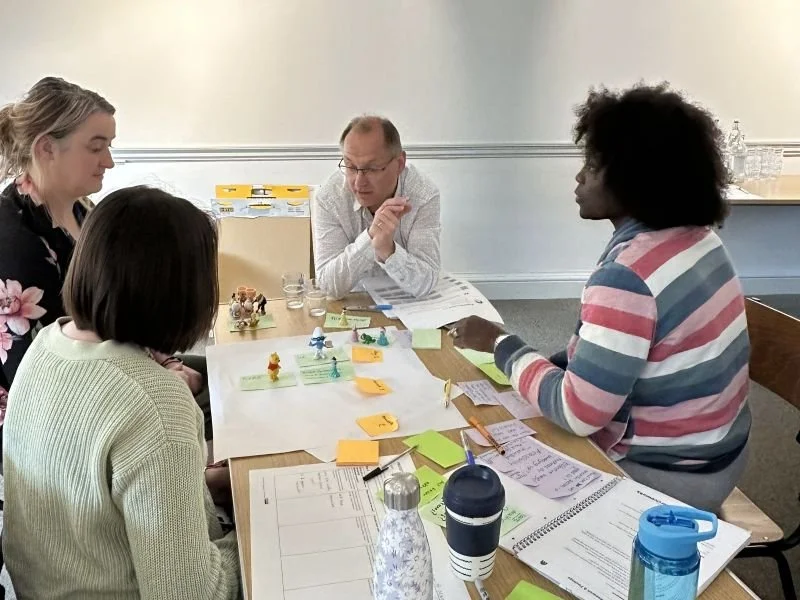
What this worksheet helps teams do
This tool helps teams to:
get clear on why the work matters
agree what they are trying to achieve
identify who the work needs to serve
define what success looks like
decide how progress and impact will be measured
That clarity can make a big difference later. It gives the team a stronger foundation for decision-making and helps reduce the risk of solving the wrong problem or pulling in different directions.
Who is it for?
This worksheet is best used by a team of people from different backgrounds.
It works well in project kick-offs, team meetings and facilitated workshops where you want people to align around the challenge before moving into solutions. The more varied the group, the better. Different people will bring different priorities, perspectives and definitions of success.
It is especially useful when a piece of work feels important but still a bit fuzzy, or when you suspect people are using the same words to mean different things.
How to use it
Bring together a group of people with knowledge of the challenge or a stake in the work.
Use the worksheet to explore three simple but important areas:
why you are doing this work
who it needs to work for and how
how you will know if you have been successful
The worksheet itself prompts teams to think about purpose, people and performance, including strategic alignment, user needs and measures of success.
As with any worksheet, the value is not just in what gets written down. It is in the conversation it creates.
Used well, this tool can help a team move from vague ambition to shared clarity.
How it works alongside Explore the challenge
This worksheet pairs well with the Explore the challenge worksheet.
Frame the challenge helps a team get clear on the problem, align around purpose and define success.
Explore the challenge helps a team surface risky assumptions, identify gaps in their understanding and decide what they need to learn before moving forward. The Explore worksheet itself is framed around facts, assumptions, unknowns and need to find out, with a focus on prioritising the riskiest assumptions and building a discovery backlog.
Used together, they can help a team both define the challenge well and avoid charging ahead based on guesswork.
Tried and tested in practice
We use this worksheet regularly in both our training and client work – including Service Design in Practice, where teams have been using it, or versions of it, since 2018, and in our work with Audit Wales, as featured in this case study, where it helped a team rethink internal communications and redesign their intranet in a more user-centred way.
Request the worksheet
Get the worksheet sent to your inbox by completing the form.
It is available as a PDF you can use digitally or print for team discussion in meetings and workshops. This worksheet is shared under a Creative Commons licence CC BY-SA 4.0 so you can freely use it in your own work. All we ask is that you say where you got if from. If you use it and find a way to improve it, we’d love to hear about it.
We’ll add you to our mailing list. We’ll never share your details and you can unsubscribe at any time.
Explore more service design tools and resources
Find out more about our companion tool for surfacing risky assumptions before time and money are committed. Get Explore the Challenge worksheet