Accredited service design training: six years of lessons
What it really takes to turn service design training into changed practice
Every few years, the Service Design Network asks me to prove I still know what I'm doing.
That's not quite how they put it. SDN Master Accreditation isn't a qualification you earn once and frame on the wall. To keep it, you have to show your work, submit a case study of your practice, and sit a panel interview with senior figures from the international service design community.
This year, I renewed my Master Accreditation for the third time. As part of that process, I submitted a detailed case study of Service Design in Practice; the eight-month programme I've been designing and delivering since 2019. I'm sharing an adapted version here, partly to mark the occasion and partly because I think the story of how and why the programme works is genuinely useful for anyone considering service design training.
The problem I was trying to solve
When I started thinking about what became Service Design in Practice, I kept meeting people who'd been on service design training and come back inspired - only to find that inspiration fading fast once they returned to their inbox, their delivery pressures, and their colleagues who hadn't been on the same course.
The tools made sense. The principles resonated. But translating that into changed day-to-day practice? That was the hard bit.
I also passionately believe that design tools and methods shouldn't be limited to design specialists. They also belong in the hands of the people closest to the work - the ones whose decisions shape how services are experienced.
So the design question I set myself was: how do you create a learning experience that changes what people actually do at work - not just what they know - and does it while fitting around a full-time job?
What I built, and why it's structured the way it is
I designed the programme the same way I'd design a service: starting with the outcome for participants, understanding the people I was designing for, and iterating continuously based on what I learned.
Three principles ended up shaping everything:
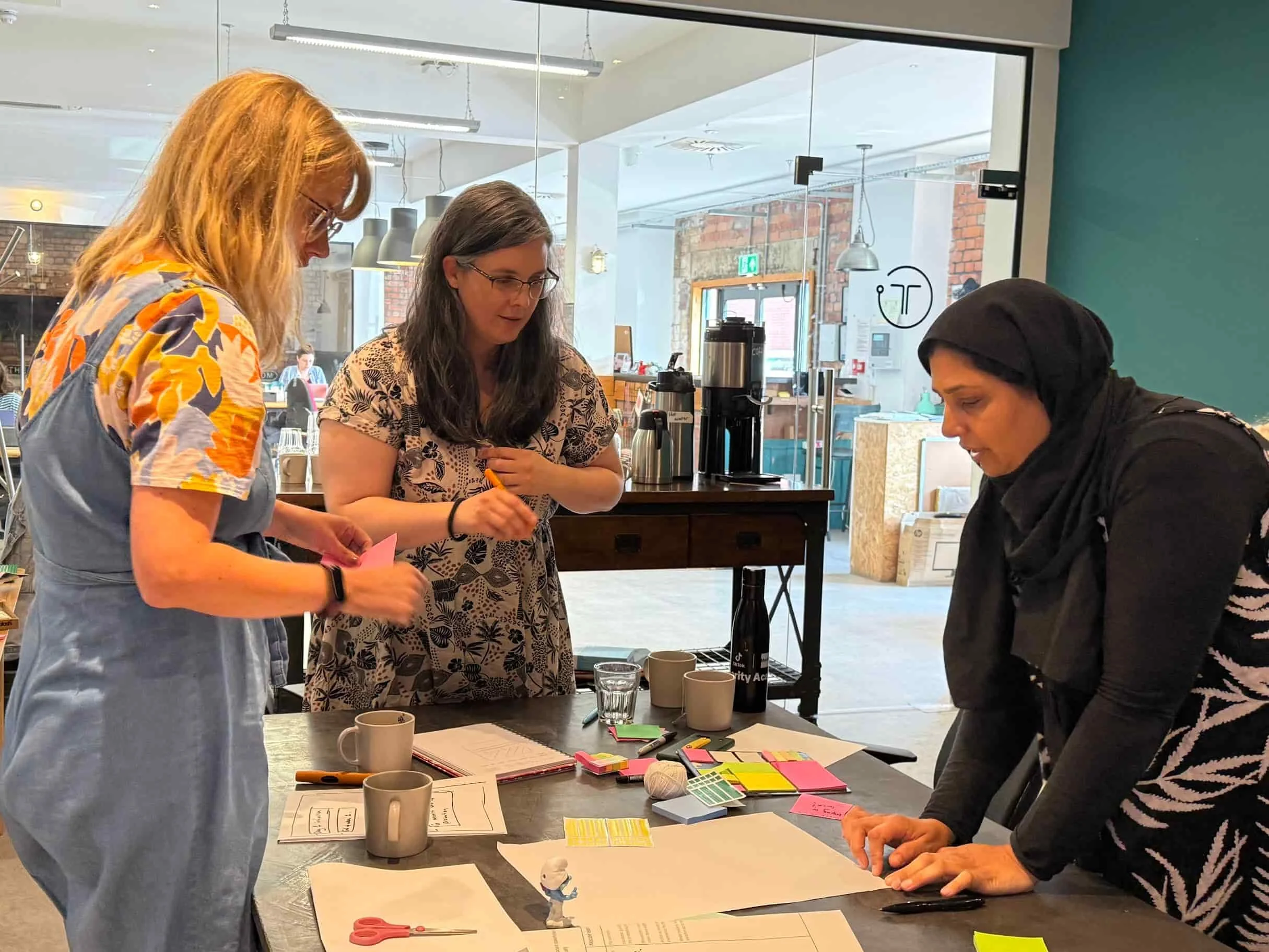
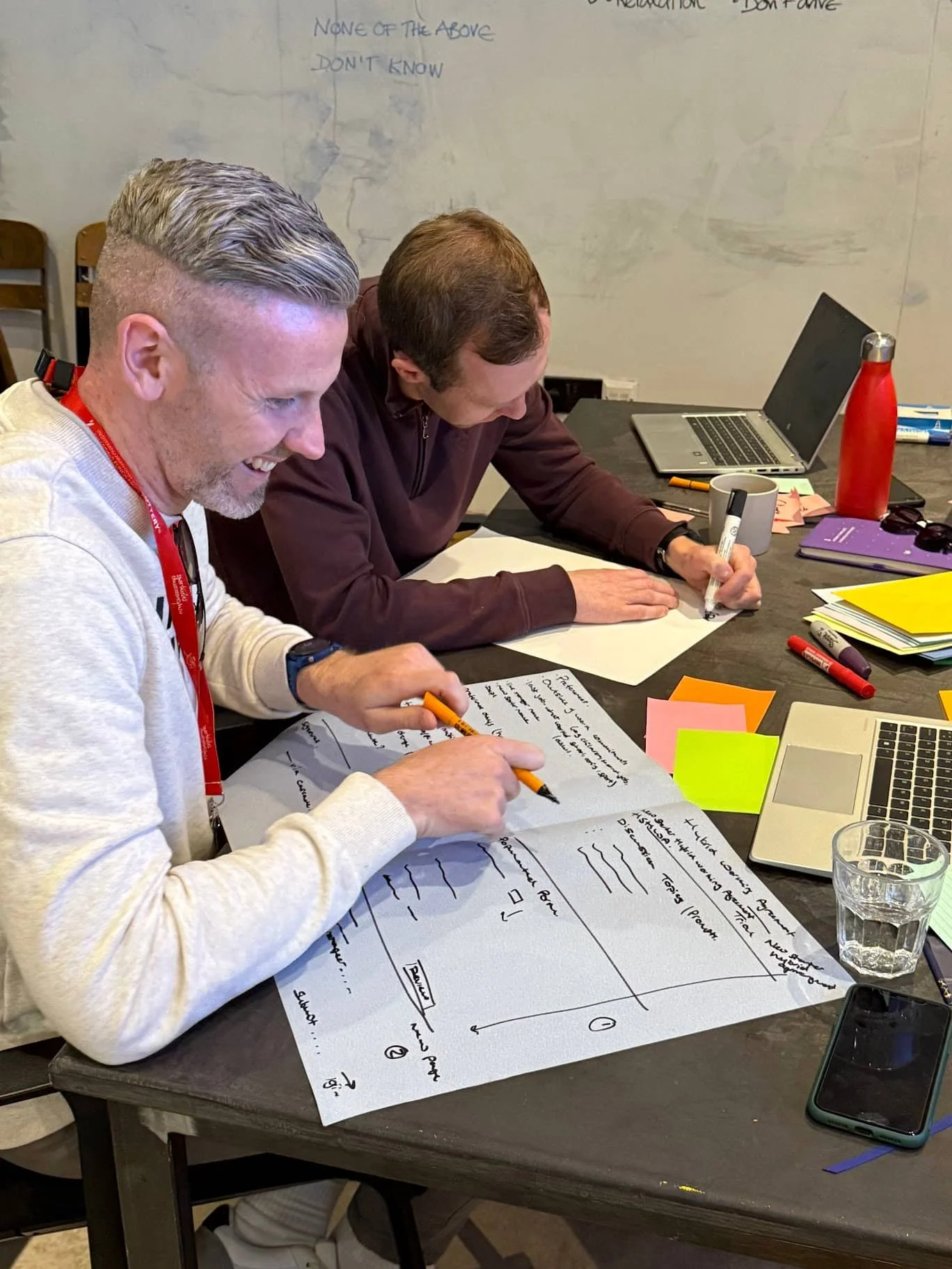
Relevance. People learn better when they're practising on something that feels real. The programme starts with a shared 'sandbox' challenge - designing a better new-starter experience - which gives everyone a safe place to try out the tools together without the stakes being too high.
Halfway through the programme, participants bring a real, live work challenge from their own organisation. That's where things get messy and interesting.
Relationships. One of the most powerful moments in an early cohort came when a participant said: "I don't mind letting myself down, but I don't want to let my team members down."
That stuck with me.
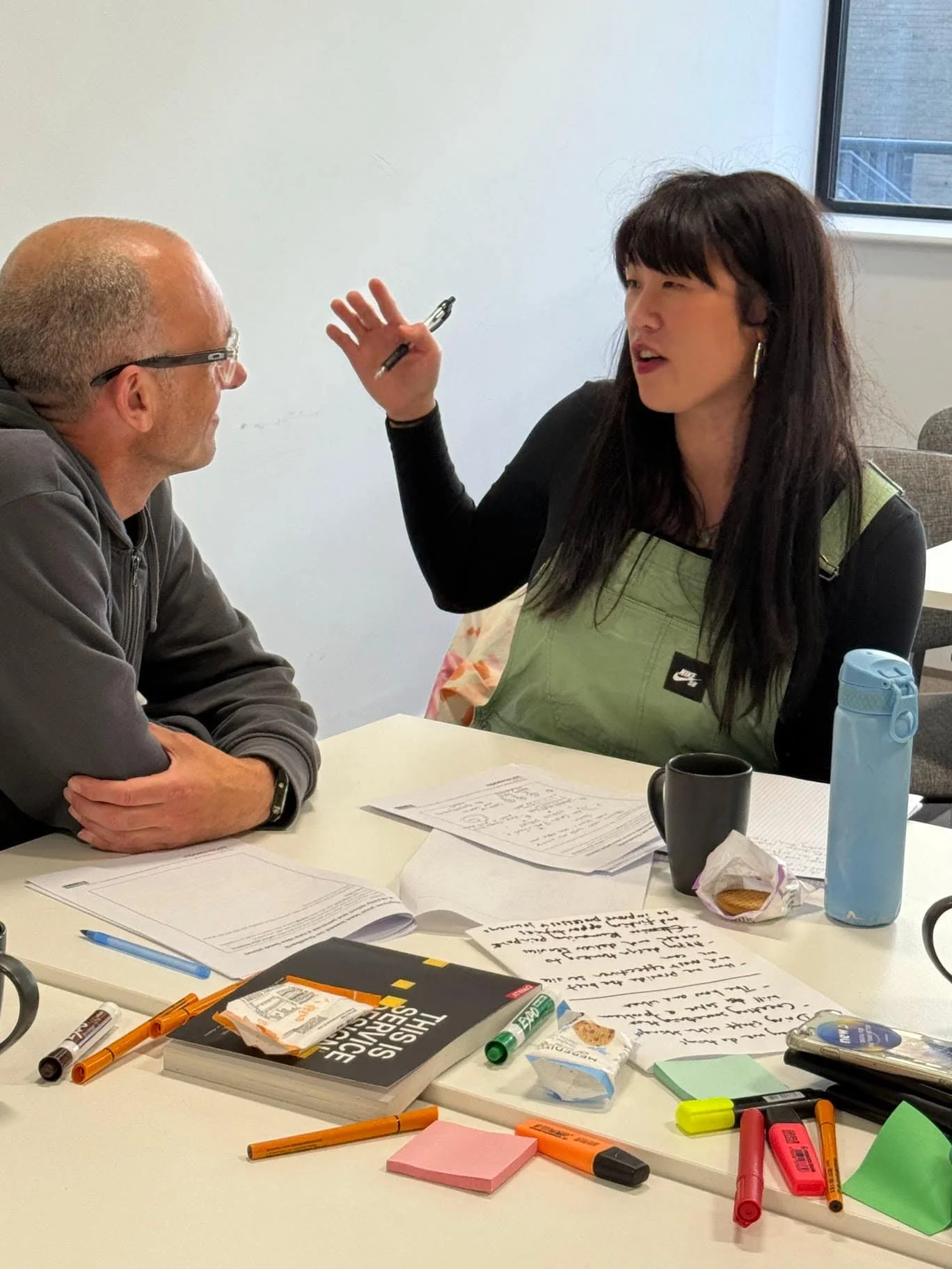
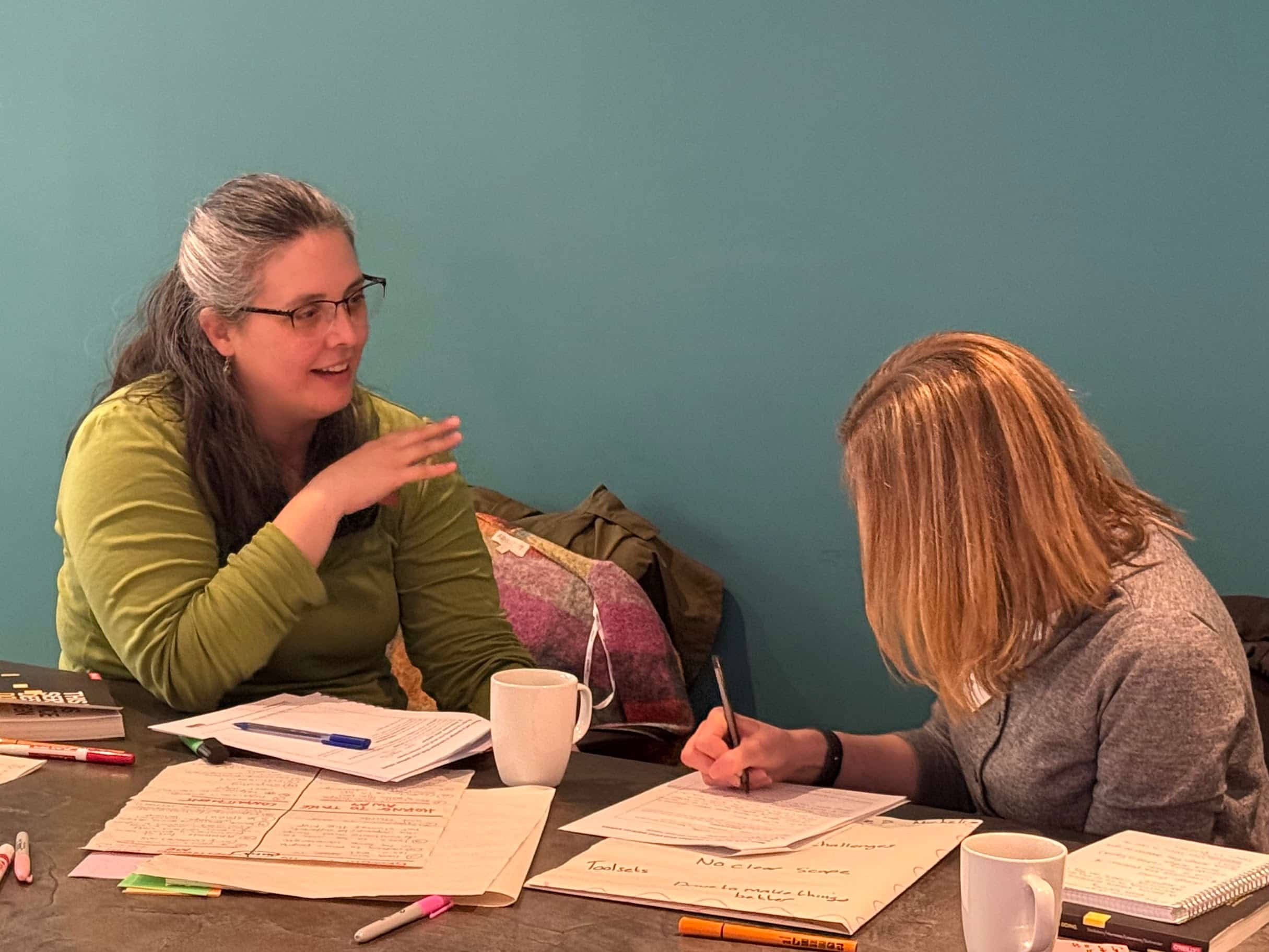
People hold themselves to account differently when others are relying on them. The programme is designed around team-based work, peer coaching, and between workshops, something we call 'coffee bingo': randomised one-to-one catch-ups that keep relationships warm and make it easier to ask for help when you're stuck.
Reflection. Without structured time to reflect, learning doesn't embed.
Every workshop starts by surfacing what people tried, what worked, and what got in the way. Every workshop ends with clear next steps, so nobody leaves wondering what to do before we meet again.
We encourage individual reflection between sessions and build in thinking time to most participatory activities.
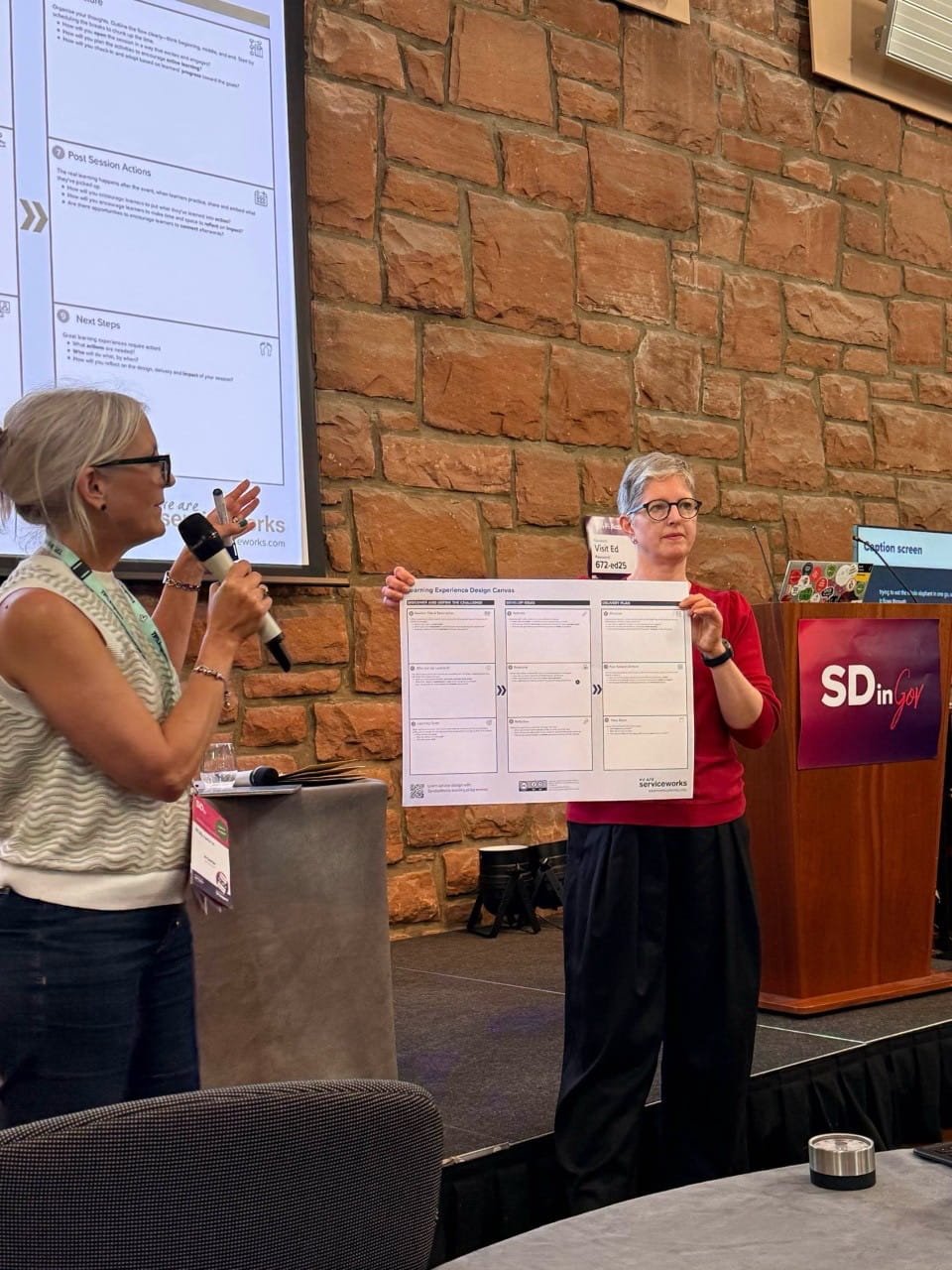
I’ve turned these insights into a worksheet that helps anyone design engaging learning experiences, which is free to download.
What the programme looks like in practice
Over eight months, participants work through the full service design cycle:
framing challenges,
questioning assumptions,
conducting user research,
generating and prioritising ideas,
testing prototypes, learning and adapting solutions, and
influencing change in their organisations.
The cohort is capped at 16, which matters. Smaller groups build genuine trust. Participants receive one-to-one coaching alongside the workshops, structured self-guided learning between sessions, and a final show-and-tell in which they share their work with peers and sponsors.
Since 2019, ten cohorts have completed the programme. That’s around 150 participants in total, with a 97% completion rate. Many join through word of mouth.
What participants say
The feedback that means most to me isn't about satisfaction scores. It's about what people go on to do differently.
Participants describe shifting from building "a really nice process that works for us" to a genuine focus on what users need and experience. One described being sceptical of service design at the start and leaving as "a convert", already applying the influencing skills in their role.
A DWP participant called it "genuinely the best training course I've ever been on" - not just for the theory, but for the practical application. Laura Sims from St John Ambulance said she couldn't speak highly enough of it "not just for understanding service design but for so much more about influencing and enabling change."
What I've learned from six years of running Service Design in Practice
The biggest lesson is that capability doesn't grow through content-heavy training alone. It grows when people practise on work that feels real, have peers who help them follow through, and are supported to reflect on what is changing.
I've also learned to treat the programme like the service it is - pre-assessing applicants to check it's the right fit, gathering continuous qualitative feedback from participants during the cohort, and staying in touch with alumni afterwards to understand what sticks and what doesn't. That ongoing insight is what I use to improve it between cohorts.
Over the six years this course has been running, I’ve had the pleasure of working alongside Melys Phinnemore, Ffion Jones and Katie Driver, who have all added huge value to the course design and delivery. I couldn’t have done this without you.
Thank you.
If you're looking for service design training you can trust, you've found it.
Service Design in Practice is specifically designed for people working in public and third sector organisations. The next cohort starts in September 2026.
Not sure if it's the right level for you? Introduction to Service Design is a three-part online course that covers the fundamentals - a good place to start if you're newer to the field.